The Charge1 Payment Gateway can help you accept credit cards and electronic check payments quickly and affordably. Merchants trust Charge1 to manage their transactions, help prevent fraud, and grow their business.
Ways to Accept Payments:
- Web Site
- Retail Store
- Mail Order/Telephone Order
- Mobile Device
The Charge1 Payment Gateway can help you accept credit cards and electronic check payments quickly and affordably. Merchants trust Charge1 to manage their transactions, help prevent fraud, and grow their business.
Ways to Accept Payments:
Web Site
Retail Store
Mail Order/Telephone Order
Mobile Device
What We Do
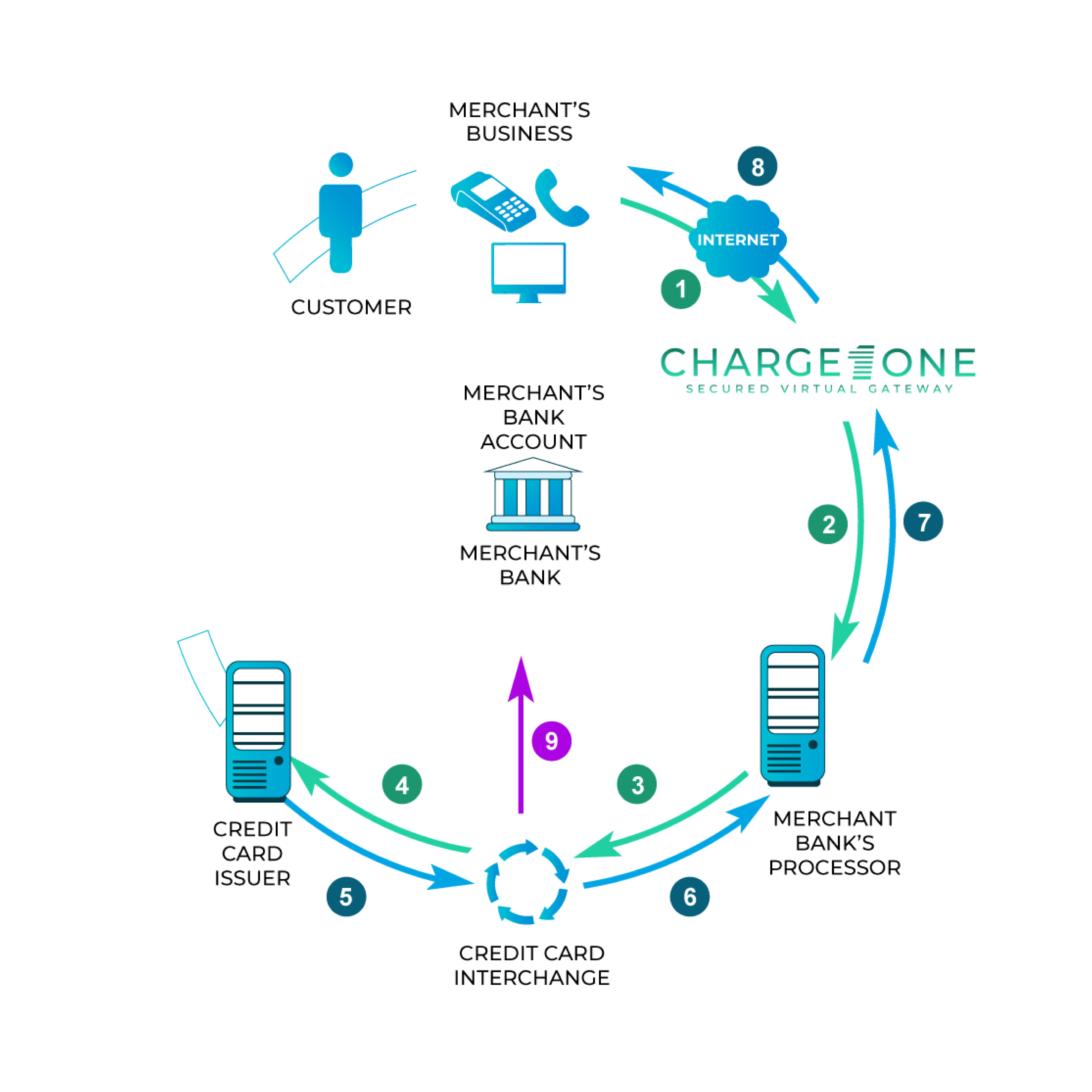
The Charge1 Payment Gateway is a secure Internet bridge between merchant businesses and the credit card and electronic check payment processing networks. We provide merchants with fast, reliable and secure passage for transaction data via a 128-bit Secure Sockets Layer (SSL) Internet Protocol (IP) connection, and manage the complex routing of payment information to the appropriate credit card processors.
The Charge1 Payment Gateway is available to merchants seven days a week, 24 hours a day. The payment gateway offers many features and options that can be tailored to specific merchant business models. To learn more about how the Charge1 Payment Gateway can support your particular business, please call us at 1-310-826-7000.
• Web Merchant Solutions
• Retail Merchant Solutions
• Mail Order & Telephone Order Merchant Solutions
• Mobile Merchant Solutions
What We Do
The Charge1 Payment Gateway is a secure Internet bridge between merchant businesses and the credit card and electronic check payment processing networks. We provide merchants with fast, reliable and secure passage for transaction data via a 128-bit Secure Sockets Layer (SSL) Internet Protocol (IP) connection, and manage the complex routing of payment information to the appropriate credit card processors.
The Charge1 Payment Gateway is available to merchants seven days a week, 24 hours a day. The payment gateway offers many features and options that can be tailored to specific merchant business models. To learn more about how the Charge1 Payment Gateway can support your particular business, please call us at 1-310-826-7000.
• Web Merchant Solutions
• Retail Merchant Solutions
• Mail Order & Telephone Order Merchant Solutions
• Mobile Merchant Solutions
Full Commerce Enablement
Delivering a seamless customer experience for customers by enabling payments from anywhere in the world all from one platform. Accept payments from all points of engagement; in-store, online, mobile or unattended. As your business increases, our full commerce enablement platform can help drive new value by achieving your business goals.
Full Commerce Enablement
Delivering a seamless customer experience for customers by enabling payments from anywhere in the world all from one platform. Accept payments from all points of engagement; in-store, online, mobile or unattended. As your business increases, our full commerce enablement platform can help drive new value by achieving your business goals.